Celebrate excellence in digital transformation at the DiBETSA 2026 Awards Gala Dinner.
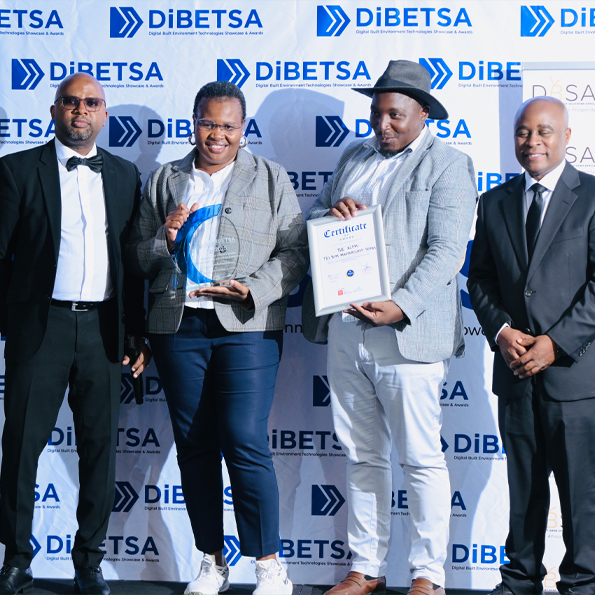
The Gala Dinner recognises outstanding projects, organisations and individuals who are making a meaningful contribution to the digital transformation of the built environment. It is an evening of recognition, celebration and networking as the winners across the DiBETSA award categories are announced.
Join us as we celebrate innovation and the achievements that are helping shape the future of the built environment.
Check out our project categories

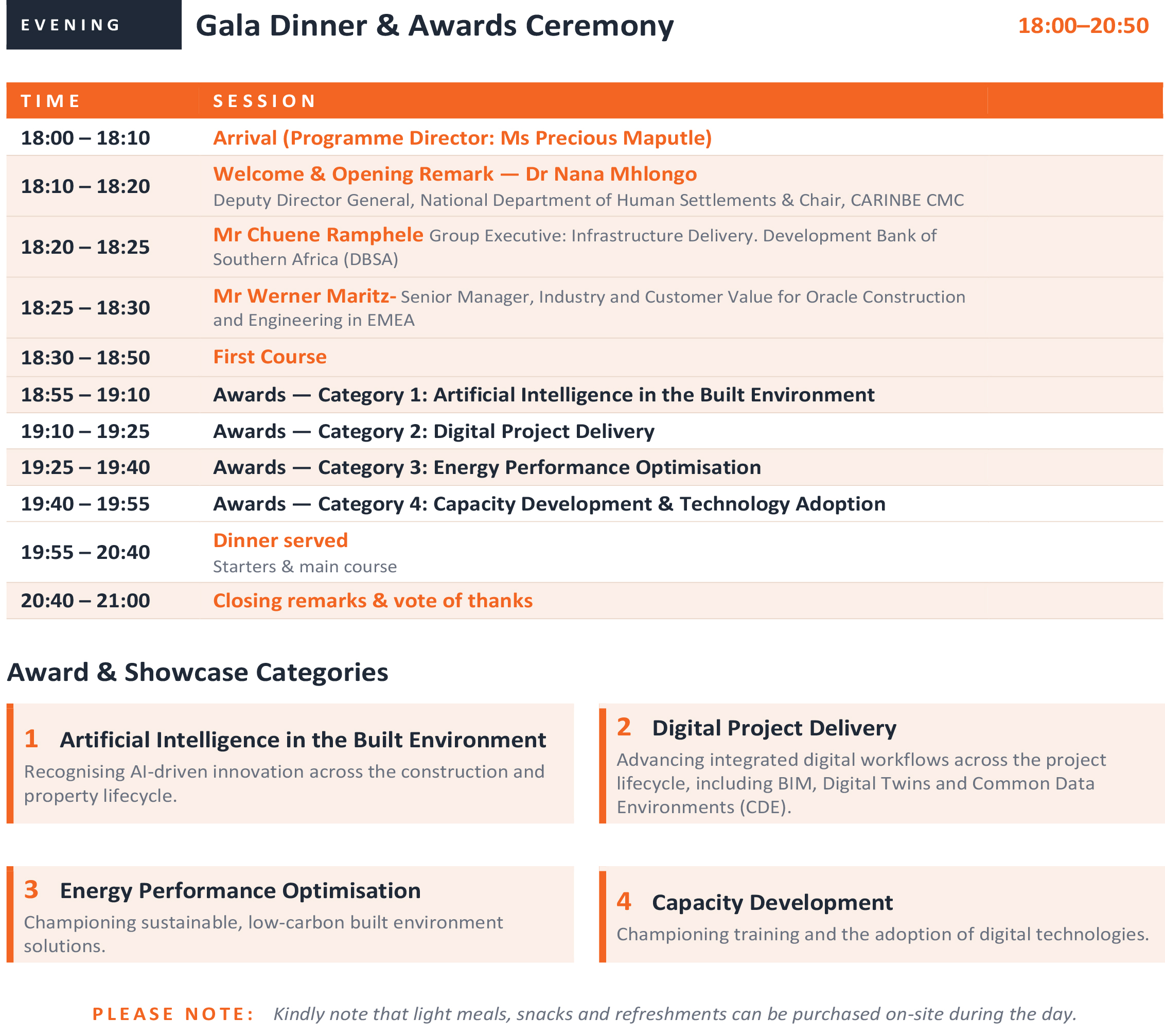
Category 1:
Artificial Intelligence in the Built Environment
This category recognises projects that have successfully applied Artificial Intelligence (AI) to improve the planning, design, construction, operation, or management of the built environment. Entries may include AI used for predictive analytics, computer vision, automation, decision support, maintenance planning, quality assurance, safety monitoring, asset management, or other intelligent applications that deliver measurable improvements. Judges will look for practical implementation, innovation, and demonstrable benefits rather than AI used simply for its own sake.

Category 2:
Digital Project Delivery
This category celebrates projects that have transformed how information is created, managed, and shared throughout the project lifecycle using digital delivery methods. This includes the effective use of Building Information Modelling (BIM), Digital Twins (DTs), Common Data Environments (CDEs), digital collaboration platforms, integrated project delivery, and connected digital workflows. Projects should demonstrate how digital processes improved collaboration, coordination, decision-making, project quality, or overall delivery outcomes.

Category 3:
Energy Performance Optimisation
This category recognises projects that have used digital technologies to improve the energy efficiency, sustainability, and environmental performance of buildings or infrastructure. This may include smart building technologies, digital energy monitoring, optimisation platforms, renewable energy integration, carbon reduction initiatives, operational efficiency improvements, or data-driven sustainability strategies. Entries should demonstrate measurable reductions in energy consumption, operational costs, emissions, or overall environmental impact.

Category 4:
Capacity Development
This category celebrates organisations, teams, or initiatives that are developing the digital skills needed to transform the built environment. Projects may include digital training programmes, workforce development initiatives, university collaborations, mentorship, change management programmes, professional development, or successful organisational adoption of new digital technologies. Judges will be looking for evidence of lasting impact, increased digital capability, and meaningful improvements in how people adopt and use technology across the industry.












Sponsorship




Partner Organisations











Organisers